Diterbitkan pada 4 Agustus 2026 19:40 WIB
Baca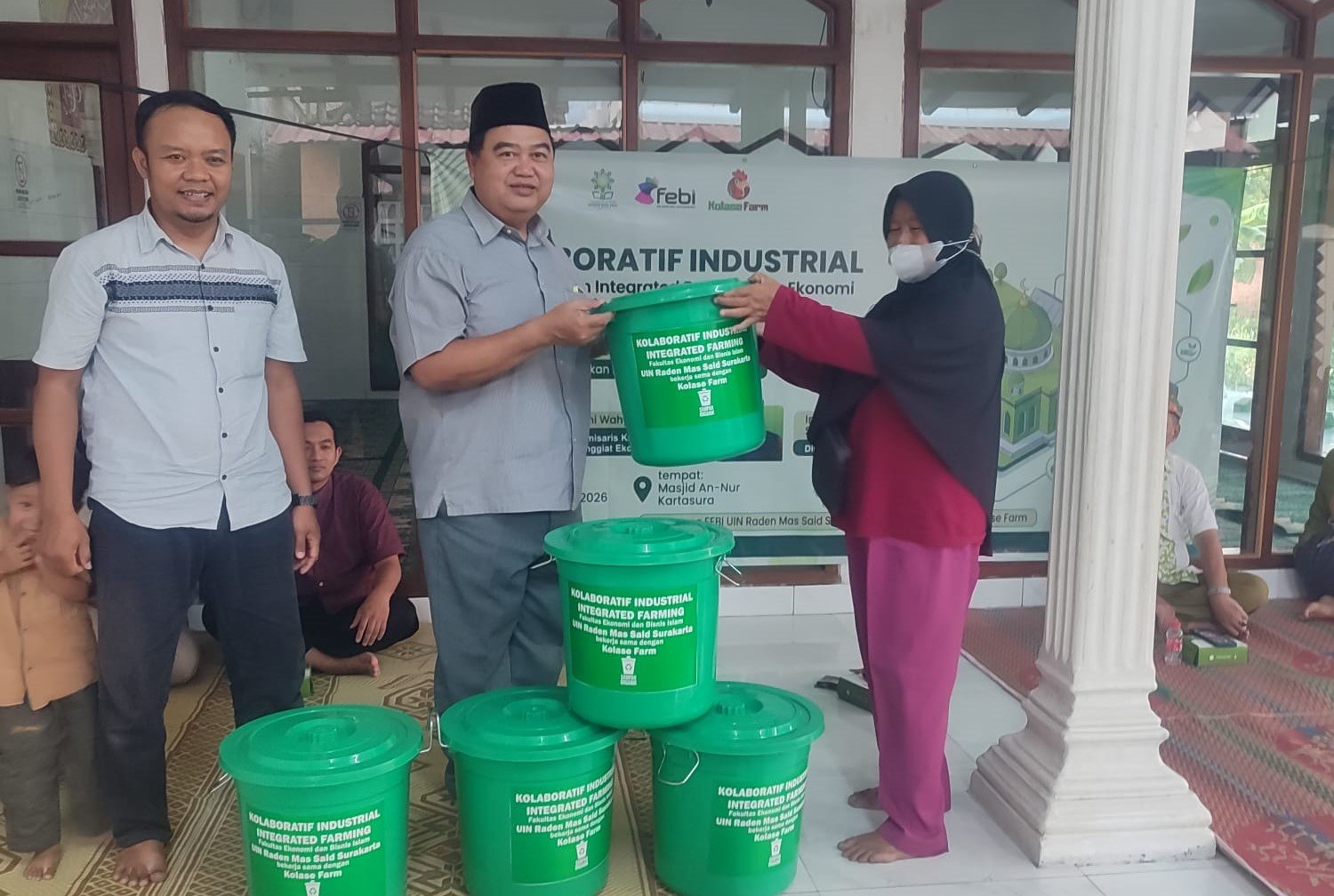
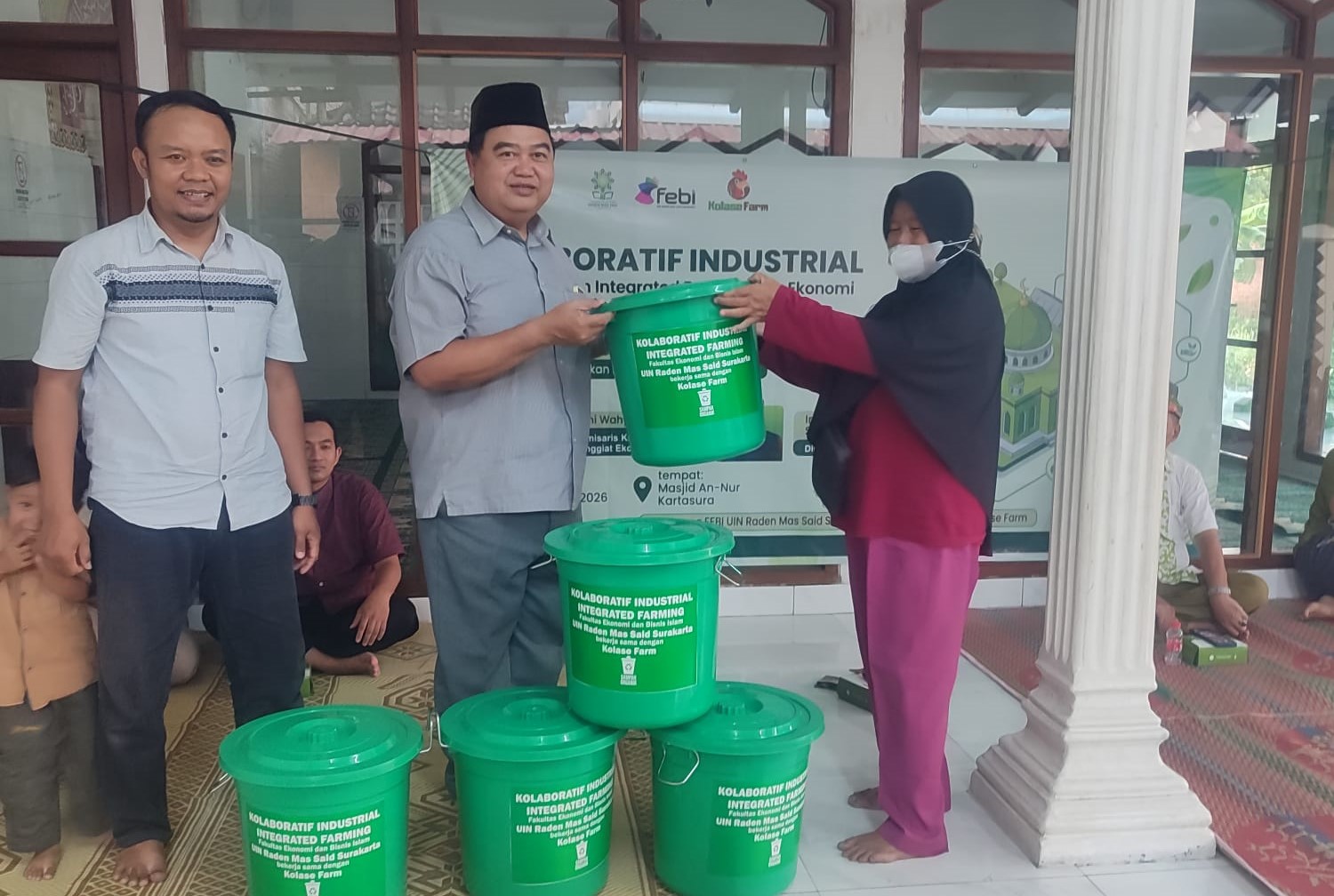
Sukoharjo, Indonesia –(4/8/2026) The Department of Digital Business, Faculty of Islamic Economics and Business (FEBI), UIN Raden Mas Said Surakarta, successfully organized an Industrial Collaboration Program focused on the launch of Mosque-Based Integrated Farming and the Circular Economy, in partnership with Kolase Farm. The initiative demonstrates the department's commitment to integrating digital innovation, sustainability, and Islamic values into community economic empowerment.
The program brought together academics, industry experts, mosque administrators, students, and community representatives to discuss innovative approaches for developing a sustainable ecosystem that combines agriculture, digital business, and the circular economy.
The event was chaired by Asep Maulana Rohimat, M.S.I., CCC., CIMM., Head of the Department of Digital Business, who emphasized that the future of community empowerment lies in the convergence of digital technology and sustainable business practices.
"Digital transformation should become the driving force behind integrated farming. Digital platforms, Internet of Things (IoT), artificial intelligence, business analytics, digital payment systems, and e-commerce can significantly improve productivity, transparency, and market accessibility. Through these technologies, mosques can evolve into digital community business hubs that create both economic and social value," Asep stated.
The opening ceremony featured remarks from Prof. Dr. M. Rahmawan Arifin, Dean of the Faculty of Islamic Economics and Business, who reaffirmed the university's commitment to strengthening partnerships between higher education institutions and industry. He highlighted that universities should actively contribute to addressing contemporary challenges, including food security, environmental sustainability, and inclusive economic development.
The keynote session was delivered by Ir. Jumadi Hanif, S.Pt., M.Sc., ASEAN Eng., Director of Kolase Farm, who presented the concept of Integrated Farming as an interconnected agricultural system integrating crop cultivation, livestock, fisheries, organic waste processing, and renewable resources into a single sustainable production cycle.
According to Jumadi Hanif, the implementation of Circular Economy principles ensures that every resource within the production system—including agricultural residues and organic waste—is continuously reused, thereby minimizing environmental impacts while maximizing economic value. He further explained that mosques have significant potential to serve as community-based economic centers by integrating sustainable agriculture, entrepreneurship, and environmental stewardship.
The discussion session encouraged active participation from attendees, generating ideas on how digital technologies can accelerate the transformation of mosque-based economic ecosystems. Participants explored opportunities for collaboration among universities, industries, local governments, and religious institutions to establish resilient and sustainable community enterprises.
During the forum, the Department of Digital Business introduced several strategic digital initiatives designed to support the implementation of mosque-based integrated farming, including:
Development of digital marketplace platforms for agricultural and halal products managed by mosque communities;
Integration of QRIS and other cashless payment systems to improve financial inclusion;
Application of Internet of Things (IoT) technologies for smart farming, environmental monitoring, and precision agriculture;
Utilization of artificial intelligence and business analytics for production forecasting, inventory management, and supply chain optimization;
Digital branding, social media marketing, and content creation to strengthen the competitiveness of community-based MSMEs;
Development of digital information systems for monitoring circular economy performance, waste management, and sustainability indicators.
These initiatives illustrate how digital business technologies can transform traditional agricultural practices into data-driven, efficient, and sustainable business ecosystems while expanding market opportunities for local communities.
Asep Maulana Rohimat noted that the Industrial Collaboration Program also serves as an experiential learning platform for students of the Department of Digital Business. By engaging directly with industry practitioners and community stakeholders, students gain practical experience in digital entrepreneurship, sustainability management, business intelligence, and Islamic business ethics.
"Digital business is not solely about adopting technology; it is about creating meaningful social innovation. Through this collaboration, we aim to prepare graduates who are capable of leading digital transformation while addressing real societal challenges through sustainable and inclusive business solutions," he remarked.
The Industrial Collaboration Program reflects the Department of Digital Business's strategic vision to strengthen industry–academia collaboration, foster innovation-driven education, and contribute to achieving the Sustainable Development Goals (SDGs). The partnership with Kolase Farm is expected to serve as a pilot model for developing digital mosque ecosystems, in which digital technology, integrated farming, and circular economy principles work together to empower communities and promote sustainable development.
As part of its internationalization agenda, the Department of Digital Business continues to expand collaborations with industry partners, government institutions, and global academic networks to advance digital innovation that generates measurable economic, environmental, and social impact.
Kartasura Tak Hanya Punya Sejarah: Ethno Carnival Disiapkan Menjadi Magnet Ekonomi Digital
3 hari yang lalu - Umum
Head of OJK Solo Delivers Digital Business Literacy to 295 Students at UIN Raden Mas Said Surakarta
4 pekan yang lalu - Umum
The “Trap of Convenience”: UIN Surakarta Lecturer Reveals AI’s Privacy Paradox
1 bulan yang lalu - Umum IDN (Bahasa Indonesia)
 AR (Arab)
 EN (Inggris)