Diterbitkan pada 21 Agustus 2026 16:43 WIB
Baca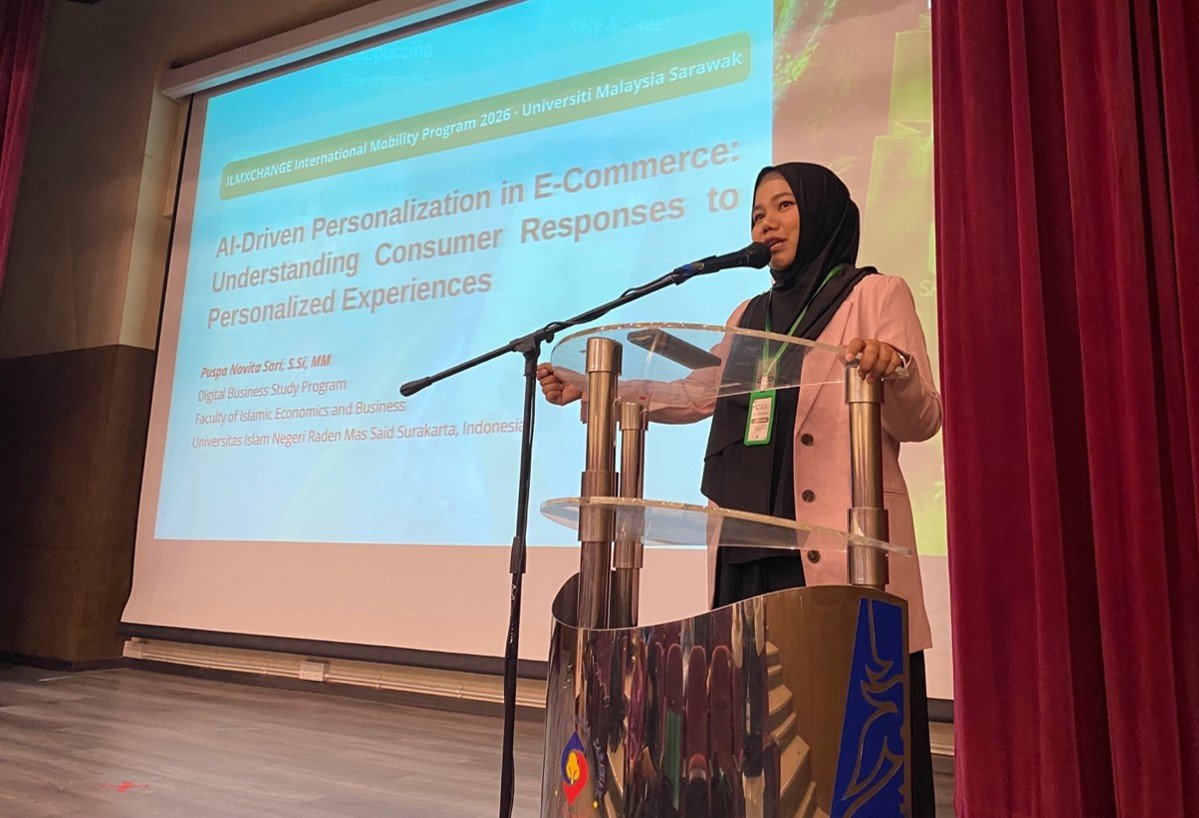
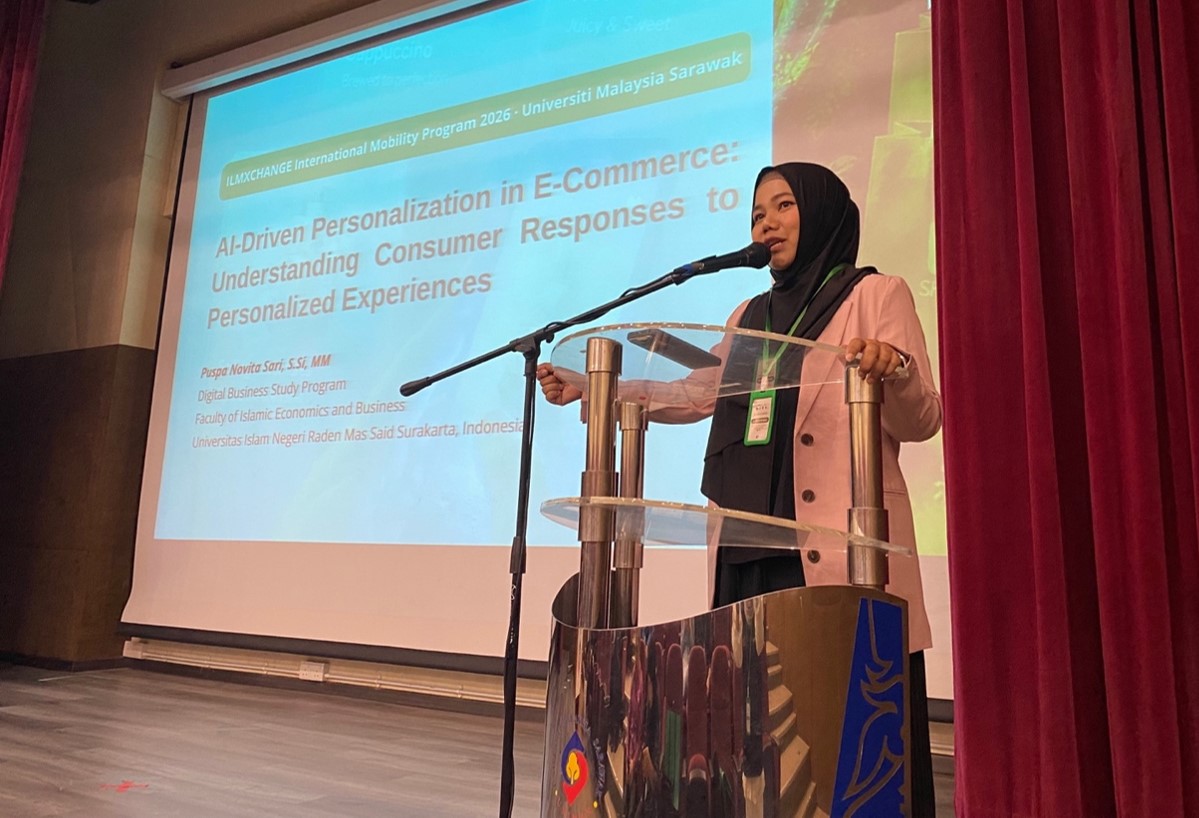
Kuching, Malaysia — The rapid development of Artificial Intelligence (AI) in the digital commerce landscape took center stage during the Knowledge Sharing and Visiting Lecturer sessions of the ILMXCHANGE International Mobility Program 2026 at Universiti Malaysia Sarawak (UNIMAS).
At the international academic forum, Puspa Novita Sari, S.Si., M.M., CPSMM, AWP, a lecturer from the Undergraduate Digital Business Study Program at the Faculty of Islamic Economics and Business (FEBI), UIN Raden Mas Said Surakarta, presented her latest research entitled “AI-Driven Personalization in E-Commerce: Understanding the Privacy–Benefit Paradox through Cognitive Dissonance.”
The study examines consumer behavioral dynamics when interacting with AI-based personalization systems on e-commerce platforms—a technology that offers greater transactional efficiency while simultaneously raising concerns about personal data privacy.
In her presentation to UNIMAS academics and students, Puspa explained that integrating AI algorithms enables digital platforms to deliver highly relevant and precise product recommendations. From the users’ perspective, this technology reduces search costs and creates a more convenient shopping experience.
However, as recommendation accuracy becomes increasingly personalized, users may begin to question how platforms are able to predict their needs with such precision. Based on research involving 255 active Shopee users in Indonesia, the study found that perceived benefits are closely associated with cognitive dissonance and consumer skepticism.
Highly relevant recommendations do not necessarily eliminate consumer concerns. On the contrary, they may increase users’ awareness of the data tracking taking place behind the scenes. This condition is described as the “Trap of Convenience”—a situation in which the convenience offered by technology simultaneously makes consumers more conscious of the privacy risks they may be sacrificing.
Addressing this paradox, Puspa emphasized that the sustainability of the e-commerce ecosystem cannot rely solely on increasingly sophisticated algorithms. She outlined four key pillars for the development of responsible AI-driven personalization:
Accuracy: Delivering relevant and targeted recommendations that provide tangible benefits to users.
Transparency: Providing consumers with clear information about how their data is collected and utilized by algorithms.
User Control: Giving users meaningful authority to manage their privacy preferences and determine the boundaries of data usage.
Responsible Data Use: Ensuring ethical and secure data governance to maintain the integrity and trustworthiness of digital platforms.
This academic contribution reflects the Undergraduate Digital Business Study Program at FEBI, UIN Raden Mas Said Surakarta's commitment to addressing critical issues in digital transformation, technology ethics, and consumer behavior at regional and international levels.
Through active participation in international forums such as ILMXCHANGE 2026, the Digital Business Study Program not only strengthens cross-border research networks but also ensures that the learning experience for students remains relevant to the rapidly evolving landscape of the global digital industry.

Kartasura Tak Hanya Punya Sejarah: Ethno Carnival Disiapkan Menjadi Magnet Ekonomi Digital
3 hari yang lalu - Umum
Head of OJK Solo Delivers Digital Business Literacy to 295 Students at UIN Raden Mas Said Surakarta
4 pekan yang lalu - Umum
The “Trap of Convenience”: UIN Surakarta Lecturer Reveals AI’s Privacy Paradox
1 bulan yang lalu - Umum IDN (Bahasa Indonesia)
 AR (Arab)
 EN (Inggris)